
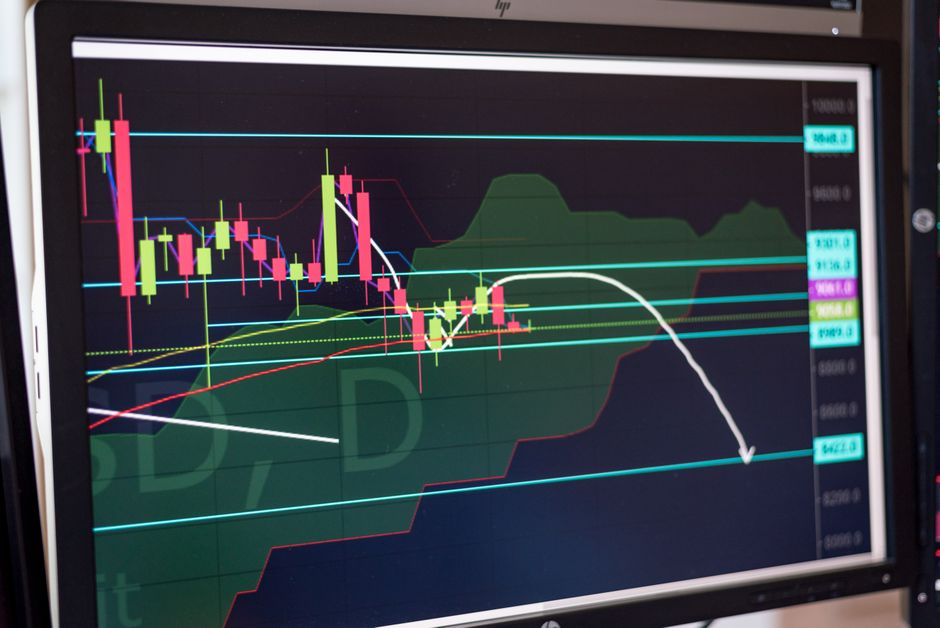
Photo by: Mikhail Nilov via Pexels
TL;DR: Yes, Apex Trader Funding actually pays out. The firm has distributed over $828 million in cumulative trader compensation since 2022 and holds a 4.3-star Trustpilot rating across 20,000+ reviews. However, securing an Apex Trader Funding payout proof requires strict adherence to automated 2026 rules: maintaining account balances above the Safety Net threshold, logging at least 5 qualifying trading days, satisfying the 50% single-day profit consistency metric, and navigating a 6-payout lifecycle cap per Performance Account.
Evaluating an Apex Trader Funding payout proof requires separating retail trading frustration from mathematical contract execution. In proprietary futures trading, retail participants frequently confuse the simulated trading environment with an unregulated financial casino. Apex operates as an algorithmic compliance system connected to simulated Chicago Mercantile Exchange (CME) data feeds. When traders respect the safety net calculations and consistency ratios, payouts process smoothly via direct deposit or international payment rails. When they treat a funded contract like a lottery ticket on macroeconomic news releases, automated compliance filters reject the withdrawal instantly.
Understanding how Apex processes withdrawals, why legitimate payout requests get denied, and how recent 2026 policy overhauls affect your trading longevity will determine whether you withdraw real capital or recycle evaluation fees indefinitely.
Table of Contents
- Apex Trader Funding Payout Proof: What the Verified Data Reveals
- How Apex Trader Funding Processes Withdrawals: From Evaluation to PA
- The Core 2026 Apex Payout Rules: Safety Net, Consistency, and Caps
- Real Trader Case Study: Navigating the 50 Percent Consistency Rule
- Why Apex Payout Requests Get Denied (And How to Prevent It)
- The Editorial Verdict: Is Apex Trader Funding Worth Trading in 2026?
- Step-by-Step Guide to Requesting an Apex Payout Without Delays
- Frequently Asked Questions
Apex Trader Funding Payout Proof: What the Verified Data Reveals

The short answer is straightforward: Apex Trader Funding is a legitimate, paying entity. Public disbursement metrics and banking settlement records confirm that Apex has paid out more than $828 million to funded traders across domestic and international jurisdictions since its inception in 2022. The firm processes thousands of withdrawal requests every calendar month through established financial intermediaries.
Customer verification data on Trustpilot displays a 4.3 out of 5-star rating across more than 20,000 independent submissions. Satisfied traders regularly post banking transaction statements and ACH settlement confirmations. Unlike unregulated CFD offshore brokers, Apex operates out of Austin, Texas, under United States commercial business laws, providing domestic legal recourse that synthetic offshore entities cannot match.
| Operational Metric | Verified Specification (2026 Standard) | Industry Context |
|---|---|---|
| Total Distributed Payouts | Over $828,000,000 USD | Among the highest cumulative totals in retail futures prop trading |
| Trustpilot Rating | 4.3 / 5.0 (20,000+ verified reviews) | Significantly higher than average forex prop firms |
| Payout Rails | ACH Direct Deposit (US) / Plane (International) | Direct electronic bank transfers; no crypto-only restrictions |
| Disbursement Speed | 5 to 11 business days | Automated compliance review followed by batch banking settlement |
| Minimum Withdrawal | $500 USD per account | Uniform across $25K, $50K, $100K, and $150K account tiers |
Yet despite these verifiable numbers, online trading forums in communities like r/ApexTraderFunding and r/FuturesTrading frequently feature heated payout denial debates. To understand why some traders receive consistent $2,000 wire transfers while others receive account termination emails, we must examine the exact path from evaluation challenge to funded withdrawal.
How Apex Trader Funding Processes Withdrawals: From Evaluation to PA

The journey to an approved payout begins with the evaluation phase. Traders purchase a simulated futures account ranging from a $25,000 tier up to a $150,000 capital tier. Following the major structural overhaul known as Apex 4.0 in 2026, evaluation accounts operate on one-time payments without recurring monthly subscription fees or restrictive Maximum Adverse Excursion (MAE) rules. Traders can choose between End-of-Day (EOD) trailing drawdown and Intraday trailing drawdown models.
Once a trader reaches the designated profit target ($1,500 on a $25K account; $3,000 on a $50K account) without breaching maximum trailing drawdown limits, they qualify for a Performance Account (PA). Our detailed analysis on the top 5 best prop firms highlights that Apex permits traders to manage multiple PA accounts concurrently using trade copiers, allowing disciplined traders to scale execution across up to 20 funded contracts.
When you trade a Performance Account, your profits accumulate in a simulated balance. When an eligible payout is submitted via the Apex Help Center portal, the automated compliance engine reviews trade logs against the rulebook. Once approved, the funds are deducted from your account equity, and real financial compensation is disbursed via ACH direct deposit for United States residents or via the Plane global payout platform for international traders.
The Core 2026 Apex Payout Rules: Safety Net, Consistency, and Caps

The vast majority of payout rejections occur because traders misunderstand the mathematical conditions governing Performance Accounts. Under the updated 2026 guidelines, four non-negotiable rules govern every withdrawal request:
1. The Minimum 5 Trading Days Requirement
In modern Performance Accounts, a trader must log at least 5 distinct qualifying trading days during each payout cycle before the request button becomes active. A qualifying day is not simply opening and immediately closing a micro contract; it requires generating a minimum profit threshold (such as $100 net profit on a $25K account) through genuine market engagement.
2. The 50 Percent Consistency Rule
To eliminate high-leverage gambling around macroeconomic releases like Non-Farm Payrolls (NFP) or Federal Reserve interest rate announcements, Apex enforces a 50% consistency metric. No single trading day can represent 50% or more of your total cumulative profit generated during that payout cycle.
If your total profit is $4,000 and you earned $2,500 on a single runaway Nasdaq rally, that single day represents 62.5% of your total balance. You will not be allowed to withdraw until you trade additional days to build your cumulative profit to at least $5,000, bringing that $2,500 day down to exactly 50% or less of the total equity curve.
3. The Performance Account Safety Net Buffer
Traders cannot deplete their account down to zero balance. Apex enforces a strict Safety Net Requirement, mathematically defined as:
Safety Net Threshold = Starting Account Balance + Maximum Trailing Drawdown + $100
On a standard $50,000 account with a $2,500 trailing drawdown, the Safety Net threshold is $52,600. During the first three payout cycles, your balance must remain above this safety net. While a minimum payout of $500 is allowed once you cross the threshold, larger withdrawals require your balance to exceed $52,600 by the full withdrawal amount requested.
4. The 6-Payout Lifecycle Cap
A critical rule change in 2026 is the finite lifecycle of Performance Accounts. Individual Performance Accounts are capped at a maximum of 6 approved payouts. After the sixth disbursement settles, the PA is automatically closed by the system. The trader retains 100% of their earned profit share, but must pass a new evaluation tier to secure another funded contract. (After six successful payouts, Apex congratulates you on your discipline by politely showing you the exit door and the checkout page.)
| Account Tier | Max Trailing Drawdown | Safety Net Level | Min Payout | Max Payout (Months 1–3) |
|---|---|---|---|---|
| $25,000 Tier | $1,500 | $26,600 | $500 | $1,500 |
| $50,000 Tier | $2,500 | $52,600 | $500 | $2,000 |
| $100,000 Tier | $3,000 | $103,100 | $500 | $2,500 |
| $150,000 Tier | $5,000 | $155,100 | $500 | $3,000 |
Real Trader Case Study: Navigating the 50 Percent Consistency Rule

To see how these guidelines function in practice, consider a verified case study shared by a funded futures trader in the r/ApexTraderFunding community. The trader was operating a $50,000 Performance Account with a $2,500 trailing drawdown limit (Safety Net at $52,600).
On Day 1, the trader caught an aggressive morning breakout on E-mini Nasdaq (NQ) futures, banking a profit of $2,300. Over the next three days, they executed disciplined scalp trades, adding $400, $500, and $600 to their account, bringing their total balance to $53,800 ($3,800 in total net profit).
Having logged 4 trading days and cleared the $52,600 Safety Net by $1,200, the trader anticipated submitting a $1,000 payout request. However, when checking the dashboard, the payout request was ineligible for two specific mathematical reasons:
- Day Count Deficiency: The account had only completed 4 trading days, falling 1 day short of the mandatory 5-day cycle.
- Consistency Ratio Breach: The Day 1 gain of $2,300 represented 60.5% of total profits ($2,300 ÷ $3,800 = 60.5%), breaching the 50% maximum limit.
Rather than attempting high-risk gambles or contacting customer support with complaints, the trader followed our guide on how to pass prop firm challenges step by step by downsizing to 2 Micro E-mini (MNQ) contracts. Over the next three sessions, they banked $350, $450, and $500 in controlled gains. This raised cumulative profit to $5,100 across 7 trading days. The Day 1 profit of $2,300 now accounted for just 45.1% of total earnings ($2,300 ÷ $5,100). The trader requested a $1,500 withdrawal, which cleared compliance and settled in their domestic checking account via ACH within 6 business days.
Why Apex Payout Requests Get Denied (And How to Prevent It)
When an Apex Trader Funding payout proof fails to materialize, it is rarely due to arbitrary manual malice. The evaluation and payout process is governed by algorithmic compliance bots. Understanding the primary failure triggers protects your capital:
1. Continuing to Trade During the Pending Window
This is the single most common cause of payout cancellation. After submitting a withdrawal request, the requested capital remains visible in your balance until compliance approves the batch. If you continue trading and suffer a loss that pulls your account balance below the Safety Net (or below your requested withdrawal buffer), the payout request is automatically invalidated and denied.
2. Dollar-Cost Averaging (DCA) into Losing Trades and Martingale Sizing
Apex strictly prohibits high-risk trading behaviors such as continuous DCA into runaway losing positions or doubling contract sizes to recover intraday losses. While aggressive martingale tactics might pass an evaluation through sheer luck, the automated audit conducted before approving a Performance Account payout will flag systemic rule violations.
3. Explosive Enforcement Waves and Prohibited Schemes
As documented in our investigative report on the Apex Trader Funding enforcement crackdown, the firm actively purges accounts involved in coordinated trading schemes, latency exploitation, and illiquid commodity manipulation (such as synthetic micro-silver spreads). Trading with authentic, directional strategies on liquid CME contracts ensures zero compliance flags.
4. Incomplete KYC or Unverified International Banking Rails
International traders must complete identity verification via Plane. If your submitted tax documentation (W-8BEN for non-US residents) or local banking details fail KYC screening, disbursement is paused until documents are re-authenticated.
The Editorial Verdict: Is Apex Trader Funding Worth Trading in 2026?

In our editorial judgment, a prop firm is only as good as its third payout. Anyone can market discounted $15 evaluation challenges and pay out a handful of $500 introductory disbursements to generate social media praise. The true measure of institutional reliability lies in whether a firm honors substantial withdrawals across months of consistent market engagement.
Apex Trader Funding passes the solvency test: the firm possesses deep liquidity and reliably executes hundreds of thousands of dollars in daily ACH and Plane transfers. However, traders must recognize what Apex is—and what it is not. While competitors like Topstep offer static or end-of-day drawdown structures designed for career longevity (as analyzed in our coverage of Topstep’s trader-friendly rules), Apex is an efficiency model built for high-volume, multi-account execution.
The 6-payout lifecycle cap fundamentally reshapes the expected value of an Apex contract. You are not building a permanent trading desk; you are extracting profit across six controlled withdrawal cycles before cycling into a new contract. For traders who understand the mathematical constraints of the 50% consistency rule and respect the Safety Net, Apex remains one of the most profitable futures prop firms in the industry.
Step-by-Step Guide to Requesting an Apex Payout Without Delays

To ensure your withdrawal request clears compliance on the first submission without manual support tickets, follow this operational checklist:
- Verify the Safety Net: Ensure your account balance exceeds the Safety Net threshold (Starting Balance + Max Drawdown + $100) by at least the amount you plan to withdraw.
- Audit Your Daily Profit Ratios: Review your trade logs to verify that no single trading day accounts for 50% or more of your total accumulated profit during the cycle.
- Confirm 5 Qualified Trading Days: Check your dashboard to confirm at least 5 distinct days with valid, non-trivial trading volume have been recorded.
- Submit During the Active Window: Navigate to the Payouts tab on the Apex dashboard, select your eligible Performance Account, input the withdrawal amount, and submit.
- Halt Trading or Trade Micro Buffers: Cease active trading on that specific PA until the payout is approved and deducted from your balance, or only trade micro lots if your balance possesses substantial excess equity above the safety net.
- Monitor Payment Settlement: Domestic US traders will receive funds via ACH within 5 to 7 business days; international traders should verify their Plane account notifications for local currency wire settlement.
Frequently Asked Questions

Conclusion
The definitive answer to whether Apex Trader Funding actually pays out is confirmed by over $828 million in distributed capital. Apex is not a scam, but it is an unapologetically algorithmic prop firm where rules are enforced by code rather than human discretion. If you treat your Performance Account with professional discipline, manage your equity curve relative to the Safety Net, and honor the 50% consistency metric, Apex provides a dependable, scalable mechanism to withdraw real trading profits.
About the Author





2 thoughts on “Apex Trader Funding Payout Proof: 2026 Rules and Real Data”
Comments are closed.